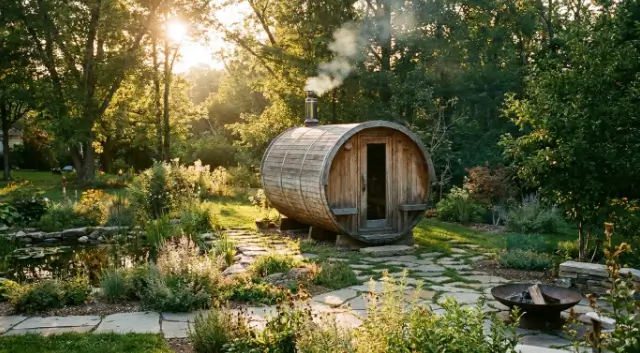

A traditional barrel sauna heats the air to 170 to 195 degrees Fahrenheit using an electric or wood-fired heater topped with rocks, and it can produce steam. An infrared barrel sauna uses carbon or ceramic panels mounted along the interior walls to warm the body directly at a lower ambient temperature, usually 120 to 150 degrees, and generally runs on a standard household outlet. Neither is objectively better; the right choice depends on whether a beginner wants an intense, steam-capable session or a gentler, lower-maintenance one that needs less electrical work to install.
How Does Heat Actually Reach You in Each Type?
Inside a traditional barrel, an electric or wood-fired heater sits low against one curved wall, with stones stacked on top that hold and radiate heat, and the whole interior air volume climbs to a high, steady temperature over 30 to 45 minutes. Pouring water over the stones produces löyly, the burst of humid heat that defines the traditional sauna ritual. An infrared barrel skips heating the air altogether. Carbon or ceramic panels built into the curved bench backs and side walls emit infrared energy that warms skin and tissue directly, so the room itself can feel noticeably cooler to the touch even while a person sitting close to the panels feels real warmth within minutes.
What Does Each Option Cost to Run and Install?
A traditional heater rated above roughly 6 kilowatts, which covers most mid-size barrel saunas built for three or more people, typically needs a dedicated 240-volt circuit, and that electrical work is a real cost most buyers do not budget for until an electrician quotes it. Infrared panel systems generally draw far less power, often 1.5 kilowatts or less for a two- to three-person barrel, and many models are designed to plug into a standard 120-volt outlet, which removes a meaningful line item from the installation budget. Running cost per session tends to favor infrared too, since it heats bodies rather than a full barrel’s worth of air, though a longtime traditional sauna user may find the lower ambient heat of infrared session less satisfying regardless of the electric bill.
How Long Does Each Type Take to Reach Working Temperature?
A traditional barrel heater, particularly a wood-fired one, commonly needs 30 to 60 minutes to bring both the air and the stones up to full temperature, which is part of the ritual for longtime users but a real wait for someone squeezing a session into a lunch break. Infrared panels reach a usable warmth much faster, often within 10 to 15 minutes, since there is no large air volume to heat and no stone mass to bring up to temperature. For a household planning frequent, shorter sessions rather than occasional long ones, that difference in startup time adds up over weeks of regular use.
What Does the Interior Experience Actually Feel Like?
Traditional heat is intense and, for many longtime users, the whole point: high ambient temperature, the option of steam, and a session that peaks and forces you out after 10 to 15 minutes at the higher end of the range. Infrared heat is gentler and more sustained, since the lower ambient temperature lets many people comfortably stay in for 20 to 30 minutes or longer, which some beginners with heat sensitivity or a heart condition find more approachable, though anyone with a cardiovascular condition should still get individualized guidance before starting either kind of routine. Neither delivers steam in an infrared unit, since there are no stones and nothing to pour water over.
What Does the Broader Research Say About Sauna Bathing in General?
A 2018 review in Mayo Clinic Proceedings summarized cardiovascular and other health associations reported across multiple sauna studies, without distinguishing between traditional and infrared heat sources in most of the underlying research. A 2023 follow-up review, also in Mayo Clinic Proceedings, looked at whether combining sauna bathing with other lifestyle factors produced additional associated benefits. A separate paper in American Journal of Physiology examined the effects of both heat and cold exposure on the body with specific reference to Finnish sauna bathing, describing physiological mechanisms behind heat’s cardiovascular associations. Most of the underlying cohort research was conducted in traditional Finnish saunas at higher temperatures, so it is reasonable but not proven that a lower-temperature infrared session produces a smaller or slower version of the same associations rather than an identical effect.
Which One Should a First-Time Buyer Actually Choose?
Someone who grew up with or has regularly used a traditional sauna, wants steam, and has the electrical capacity or budget for a 240-volt circuit will likely be disappointed by infrared’s lower intensity. Someone without spare electrical capacity, who wants faster startup times for daily use, or who finds high heat uncomfortable is often better served by infrared. Buyers who are not sure yet can browse SweatDecks barrel saunas across both heating types before deciding, since seeing heater wattage, voltage requirements, and interior bench layout side by side makes the tradeoff concrete rather than theoretical.
Can a Barrel Sauna Combine Both Heating Methods?
A small number of manufacturers offer hybrid barrel saunas that pair a traditional rock-topped heater with supplemental infrared panels along the lower bench area, letting a user run either mode independently or blend the two for a session that starts with faster infrared warmth and finishes at higher traditional heat. These hybrid units cost more than either single-mode option and add complexity to both the wiring and the control panel, which is a real tradeoff against the appeal of not having to pick one heating style permanently. For most first-time buyers, a hybrid is worth considering only after spending real time in both a traditional and an infrared session and still not being able to settle on a preference.
How Does Resale Value Compare Between the Two Types?
Traditional barrel saunas have a longer track record in the used market, and buyers shopping secondhand generally have more traditional units to choose from and more comparable sales to judge a fair price against. Infrared barrel saunas are a newer category with less resale history, which can work in a buyer’s favor when purchasing new, since the panels themselves typically carry long component warranties and lower long-term running costs, but it also means less price certainty if reselling the unit down the road. Neither factor should be the deciding one for someone buying primarily for years of personal use rather than planning an eventual resale.
Frequently Asked Questions
Can a barrel sauna use infrared heat instead of a traditional heater? Yes. Some models mount carbon or ceramic infrared panels along the interior bench backs instead of a rock-topped heater. Either heating method works with the curved barrel shell.
Which is cheaper to run, traditional or infrared? Infrared generally costs less per session since it runs on lower wattage and reaches usable warmth faster, needing less total energy for a typical session.
Does a traditional barrel sauna need special electrical work that infrared avoids? Often yes. Traditional heaters above about 6 kilowatts typically need a dedicated 240-volt circuit, while many infrared units run on a standard 120-volt outlet.
Is steam possible in an infrared barrel sauna? No. Infrared panels heat the body directly rather than air or rocks, so there is nothing to pour water over for steam.
References
- Cardiovascular and Other Health Benefits of Sauna Bathing: A Review of the Evidence, Mayo Clinic Proceedings, 2018
- Does the Combination of Finnish Sauna Bathing and Other Lifestyle Factors Confer Additional Health Benefits?, Mayo Clinic Proceedings, 2023
- Effects of heat and cold on health, with special reference to Finnish sauna bathing, American Journal of Physiology, 2018
By Owen Bradshaw


 By
By