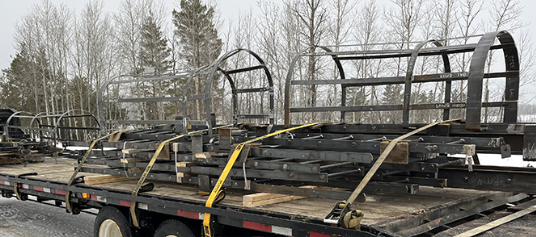

Most structural problems on a new build do not begin on site. They begin in a drawing where a beam, a bracket or a column sits slightly outside anything a mill rolls as standard. Booking structural steel fabricators in Ontario early gives that detail somewhere to go before the crane arrives for pickup.
Standard sections solve standard problems. When a frame has to clear existing services, carry an unusual load path or tie into an older structure, the catalogue runs out. Structural steel fabricators in Ontario build components to the dimensions on your drawing rather than the dimensions on a stock list, keeping the design intact and the schedule moving.
Where Catalogue Steel Stops Matching the Drawing
Beams and Columns Sized for the Actual Opening: Custom fabrication becomes necessary the moment a member has to fit a space that was never designed around a standard section. Retrofits, older buildings and tight mechanical rooms rarely offer clean dimensions. A beam cut, coped and drilled to the measured opening avoids the packing and improvised support that follow a near enough fit.
Brackets and Frames That Carry the Connection Detail: Brackets, base plates and frames do the work standard sections cannot, because they hold the connection between two things never meant to meet. A bracket made to the exact bolt pattern, plate thickness and edge distance shown on the drawing removes guesswork from the erection crew and keeps the load path predictable.
See also: Why Preventive Dentistry Extends The Life Of Whitening And Veneers
How Precision and Welding Quality Decide the Outcome
Tolerances That Decide Whether Steel Fits First Time: Accurate fabrication is measured in millimetres, because a component a few millimetres out becomes a site problem that costs hours to address. Controlled cutting, drilling and fitting hold those tolerances before anything leaves the shop, and make-to-order manufacturing keeps every part tied to the drawing it came from rather than a general stock size.
Weld Quality and Material Grade Decided Together: A sound weld is defined by fusion through the joint rather than a neat surface bead, and the grade of steel underneath changes how that joint behaves under load. Qualified procedures, certified welders and documented inspection are what experienced structural steel fabricators in Ontario rely on to prove a component performs the way the design assumed.
What Postponing a Fabrication Order Costs Later
Lead Times That Compress the Whole Programme: Fabrication booked at short notice does not move faster, it pushes every following trade into a narrower window. Shop capacity is planned weeks ahead through demand forecasting, so a late package competes with work already scheduled. Concrete pours, cladding and mechanical fixing all wait on steel that has not been cut.
Options That Narrow Once the Structure Is Standing: Late changes cost more because the practical choices shrink as the build progresses. In everyday fabrication practice, shop supervisors routinely see components ordered after erection has started, where the only remaining fix is site welding under poor access. A part measured and made early avoids that situation and keeps the sequence intact.
Custom Fabrication Weighed against Stock Sections and Site Work
Stock Sections Bought Straight from the Supplier: Buying standard sections works when the design was drawn around them and the connections are simple. The trade-off appears at the detailing stage, where holes, copes and end plates still have to be produced by someone. What looks like the cheaper route often shifts cost onto site labour and extends the programme.
Cutting and Welding Steel in the Open Air: Site modification is sometimes unavoidable, though it removes most of the control that makes fabrication reliable. Cutting and welding outdoors means variable weather, awkward positions and limited inspection. Shop fabrication keeps the work on a flat table with proper fixturing, which is why the finished tolerance is far easier to prove.
Value That Holds Long after the Build Is Finished
Coatings and Preparation That Decide Service Life: How long fabricated steel lasts depends as much on preparation and coating as on the metal itself. Mill scale removal, clean edges and a properly cured finish slow the corrosion that road salt and freeze-thaw cycles drive every winter. Steel treated correctly in the shop stays sound for decades.
One Bracket Today and a Full Package Tomorrow: Experienced structural steel fabricators in Ontario handle a single bracket and a complete structural package through the same process, which matters when a project grows. Drawings, cutting data and welding records from a small order carry into a larger run, so repeat parts match the originals without a second round of measuring.
What to Weigh before Awarding a Fabrication Package
Comparing quotes on price alone hides the differences that matter once components arrive. The points below help you assess structural steel fabricators in Ontario on the things that affect fit, safety and delivery rather than the figure at the bottom of the page. A short conversation about capability usually reveals more than a breakdown.
- Certification held by the shop and its welders is verified by an outside body, not self-declared.
- In-house cutting, fitting and welding keeps a job under one roof and avoids subcontracting delays.
- Stated capacity limits such as maximum plate thickness and table size answer feasibility quickly.
- Willingness to work from a sketch matters when no formal drawing exists for a repair.
Steel That Arrives Ready to Bolt Up
Components made to the measured dimensions of a project remove the small uncertainties that turn into delays, because accuracy is settled in the shop long before delivery. Leaving fabrication until the structure is standing narrows what can still be corrected and pushes cost into site labour. Send your drawings or a sketch to arrange a quote.


 By