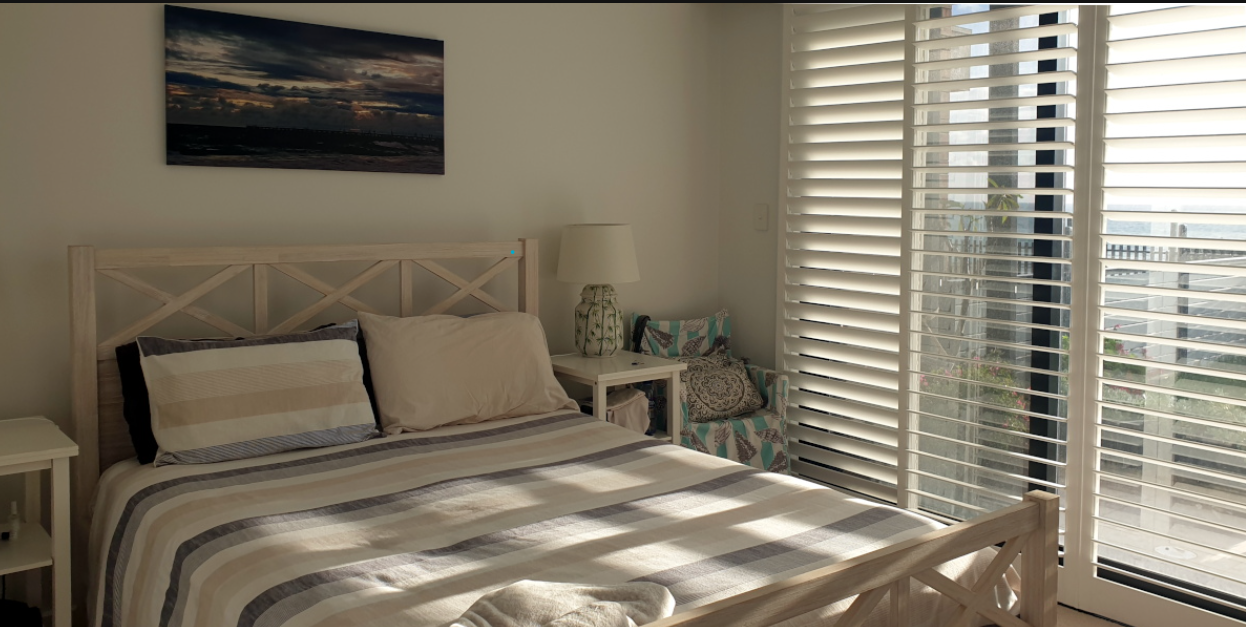

A panel that has been hanging on a west-facing window for twelve years tells you more than any showroom sample ever will. The colour has either held or drifted. The louvres still sit level, or one end has started to droop. Buyers almost never get to inspect that stage before they order, which is unfortunate because the second decade of ownership is when the money either pays off or quietly goes missing.
Material decides most of the outcome. Plantation shutters, timber panels and moulded plastic panels sit close enough together on a display board that plenty of people cannot pick from which is which. A decade of Australian sun sorts them out fast. One ages slowly and can be brought back. The other reaches a point where nothing helps except replacement.
How Plantation Shutters Timber Panels Hold Their Shape
Engineered timber is built up in layers rather than cut from a single piece, and those layers are laid so that the natural movement in one works against the movement in the next. Moisture content is sealed in during manufacture, which stops a panel from drinking humidity through a Queensland summer and then giving it all back in July. Wide panels gain the most from this. A plantation shutters timber panel of 1050 mm can still hold a straight top rail years later, mostly because the construction is fighting itself in a useful way. Not something anyone thinks about at quote stage, admittedly. It becomes very obvious the first time a door panel refuses to close.
The coating carries the other half of the job. Automotive-grade two-pack urethane hardens through cross-linking, in which two components react to form a film bonded to the surface rather than sitting on top of it the way ordinary house paint does. That is why a knock from a vacuum head marks a timber panel less than it marks a painted plastic blade. The finish reflects light without turning glassy, and cleaning it means a damp cloth, not a careful routine with special products.
See also: Why Preventive Dentistry Extends The Life Of Whitening And Veneers
What Sunlight Does to Shutter Finishes Over Time
Ultraviolet light eventually wears down every surface, though not at the same rate. On cheaper finishes, the first visible sign is chalking, a fine powdery residue left behind when the binder in the coating breaks apart and releases pigment. Run a finger along an older window covering, and it sometimes comes away on your skin. PVC presents a separate problem, since the material yellows and greys from the inside out, and no surface treatment can reverse it. Most warranties stay very quiet on this point.
That silence is worth chasing up before any deposit changes hands. A warranty covering hinges and hardware while saying nothing about the finish is protecting the part that rarely fails. Seven years of cover on colourfastness and gloss retention sits well outside what the imported plastic sellers offer, and asking a competitor to match it in writing is a quick way to find out how confident they actually are.
Why Timber Plantation Shutters Can Be Restored Rather Than Replaced
Old timber panels can be stripped, recoated and hung again in a completely different colour. Australian workshops offer restoration for exactly this reason, and the work costs a fraction of a fresh order. Painted plastic cannot go down that road at all, because paint refuses to bond to PVC properly, so a set of worn plastic panels after 10 to 15 years has one destination, and it is the tip. Think about how many times a house gets repainted in twenty years. Then think about which window covering can follow the walls without being thrown out.
Before ordering anything, a few questions cut through most of the sales talk:
- Ask what the coating warranty covers and for how many years, then ask for it in writing.
- Ask whether the panels can be repainted later, and what that process involves.
- Ask where the panels are manufactured and how long production actually takes.
- Ask what the maximum single panel width is, since fewer panels means fewer stiles blocking the view.
- Ask whether the supplier will check your measurements before the order goes into production.
Shutters are closer to fixtures than to soft furnishings. They stay with the house, they get sold with the house, and the good ones outlive the fashion that prompted the purchase. A plantation shutter’s timber panel that still looks right in 2040 costs less per year than a plastic one that’s replaced twice in the same period, even when the plastic quote looked friendlier on the day.
Send through your rough window sizes and a photo of the opening, and ask for a quote on plantation shutters timber panels before comparing anything else.


 By