
It is 1:47 a.m. in the morning. You stand on your stoop, away from 14th Street, wearing one shoe, holding a dead cell phone in your hand, and having misplaced your keys somewhere in the dark night. DC is never quite still at this hour, but quiet nonetheless. There is laughter echoing from two streets down, and the sound of a siren rises up through Florida Avenue.
So you borrow a phone. You make the call to a locksmith.
Here is what happens next, behind the scenes, from the moment you hang up talking to a DC locksmith.
The first few minutes are mostly about confirming you.
Before any locksmith gets in a van to head in the caller’s direction, the dispatcher is sorting out a few things. Your address. Your ID plan, once the door opens. Whether you rent, own, or stay somewhere as a guest. This matters more than people realize. A DC locksmith cannot just pop open any door on request. You will be asked to prove the place is yours, usually with a license or a piece of mail, once you are inside. That verification step is non-negotiable with any reputable operator in the District.
They’ll want to know about the lock. Is it a deadbolt? Does it have a knob lock as well? And is the door swollen due to last week’s humidity? The questions may seem insignificant, but they determine the equipment that comes out of the truck.
The assessment on your door
Once the technician gets there, the first two minutes are pretty much devoted to visual inspection. They examine the strike plate, measure the gap between the door and the frame, and inspect the knob. They’re looking for signs of forced entry since some lockouts actually happen to be unregistered break-ins.
You might feel a pull to rush them. Do not. That pause is where damage gets avoided.
See also: Why Luxury Living Rooms Furniture Needs More Than a Pretty Sofa
How do they actually open the door?
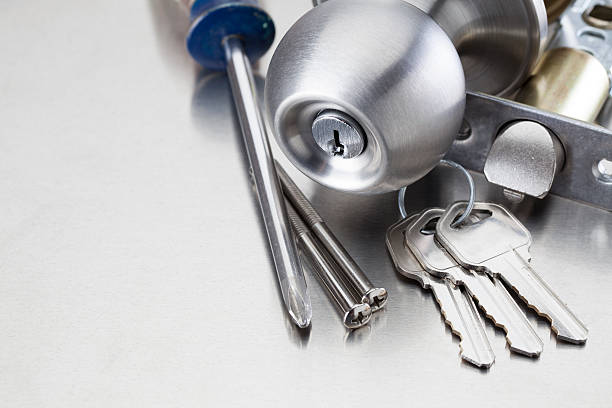
Most residential doors in neighborhoods like Mount Pleasant, Shaw, and Petworth use pin tumbler locks. These are standard, and a trained tech can open them without drilling in the large majority of cases. The two main methods are picking and bumping.
The process of picking requires time and silence. The technician uses a tension wrench and a pick to push every pin along to the shear line until the cylinder rotates. The bumping technique relies on the use of a specially cut key that will jolt all the pins simultaneously for an instant period of time.
If you have a high security cylinder, one installed in some Capitol Hill rowhouses as the new high security locks, then the time required to pick it may exceed twenty minutes. This is not a mistake; this is the function of the lock.
Drilling is the last option, not the first. If you hear a drill inside the first five minutes, something is off.
What happens once you are back inside
Most folks think the process is over the moment the lock is opened. But that is far from the case.
A responsible locksmith will require that the key be inserted and the lock operated several times to ensure that there have been no obstructions created by entering the property through a forced entrance. Should you lack access to the key, as is often the case in DC due to room changeovers and missing locks, re-keying becomes a viable alternative.
Rekeying is cheaper and faster. The tech swaps the pins inside your existing cylinder, so old keys stop working. Replacement makes sense if the hardware is worn down or just ugly, and you have been meaning to deal with it anyway.
The part no one warns you about
Here is the ugly side. Late-night lockouts are where shady operators do their best work. You have probably seen the ads. The ones with a local number that routes to a call center three states away. The truck that shows up is not the company you called. The price quoted on the phone triples once the door opens.
The real thing about a DC locksmith is that they provide an estimate on paper prior to working. They will never demand money up front. They appear either in a marked car or, at the very least, with a business card that has the same number on it. If anything seems fishy when they knock at your door at 2 a.m., then you can tell them to leave. You have that option.
Small things that save you next time
The job usually ends with a short conversation about prevention. A spare key with a trusted neighbor. A small lockbox bolted somewhere discreet. A smart deadbolt if your building allows it, which many DC condos do with board approval.
Perhaps the most useful habit is the boring one. Check your pockets before the door closes. That one beat of pause, done consistently, prevents most of the calls that end with someone standing barefoot on a stoop at two in the morning, waiting for a van to turn the corner.


 By
By